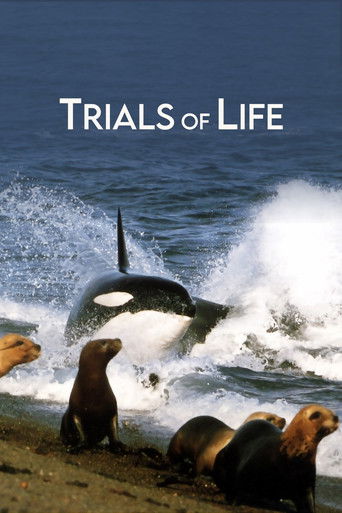
Trials of Life - Season 1 Episode 11 Courting
Season - Episode
1
Season 1 Oct 04, 1990
-
 1 - 1Arriving Oct 04, 1990
 -
 1 - 2Growing Up Oct 11, 1990
 -
 1 - 3Finding Food Oct 18, 1990
 -
 1 - 4Hunting and Escaping Oct 25, 1990
 -
 1 - 5Finding the Way Nov 01, 1990
 -
 1 - 6Home Making Nov 08, 1990
 -
 1 - 7Living Together Nov 15, 1990
 -
 1 - 8Fighting Nov 22, 1990
 -
 1 - 9Friends and Rivals Nov 29, 1990
 -
 1 - 10Talking to Strangers Dec 06, 1990
 -
 1 - 11Courting Dec 13, 1990
 -
 1 - 12Continuing the Line Dec 20, 1990
0
Season 0 Jan 01, 1970
-
 0 - 1The Making Of The Trials Of Life Jan 01, 1970
Overview
This programme surveys the methods employed in attracting a mate, mainly those of birds. The Indian florican inhabits long grass, and so is difficult to see. In order to gain attention, it 'trampolines' in the same spot for up to 400 times a day. Whales sing to their prospective partners, and the female's calls can be heard by suitors for over eight kilometres. When animals send out signals of attraction, they must also ensure that they don't entice the wrong species, and so have markings that differ prominently. Attenborough highlights the booby as an example: there are around half a dozen species, all of which may occupy the same island. However, the blue-footed booby reassures its chosen mate by continually lifting its feet. Tropicbirds and marsh harriers are shown providing graceful aerobatic displays, while the sac-winged bat uses a strong perfume to lure a companion. Among those birds that produce the most spectacular visual displays are the lyrebird (which also has an elaborate song), the peacock, and the riflebird (and indeed most other birds of paradise). The bowerbird invites potential partners to inspect its bower: a specially prepared area that contains a hut or walkway augmented by strikingly coloured objects. The intricate dances performed by manakins in Trinidad are also examined. Finally, Attenborough observes the topi's display courts, whose sharply defined boundaries are jealously guarded by rival males.
Year 1990
Studio BBC One
Director
Crew Mike Gunton (Director), Peter Jones (Executive Producer), Peter Jones (Producer), George Fenton (Music), Paul Atkins (Director of Photography), Martyn Colbeck (Director of Photography)
Popularity 1.4108
Language English
Similar